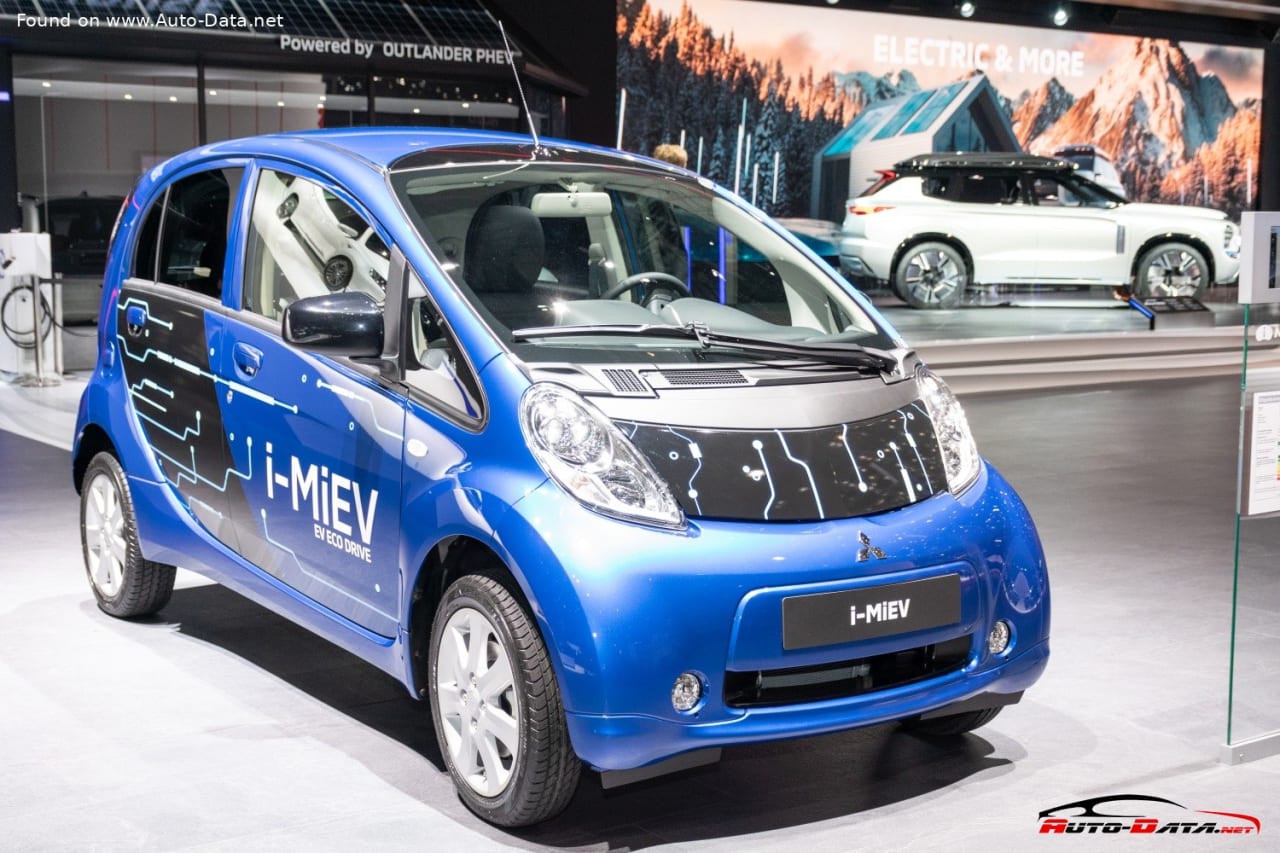
Mitsubishi i-MiEV 16 kWh (67 Hp)
Mitsubishi logo
EVRadar-Fahrzeugkarte
2009 / Japan
400V

Mitsubishi i-MiEV

16 kWh (67 Hp)

Mitsubishi i-MiEV battery-electric hatchback.

Mehr zu Mitsubishi
Wichtige Details

Kurz zusammengefasst, alle Zahlen darunter.

Preis ab

Preise für weitere Märkte im Admin hinzufügen.

Winterreichweite
0 km

100% unter WLTP bei diesem Modell.

Schnellstopp
0 km

0 km/min bei 15 Minuten Stop.

Batterienutzung
14.5 kWh

91%% nutzbar zu brutto.

Winter
0 km
Autobahn
0 km
DC-Peak
50 kW
10–80%
0 min
HatchbackRWDNMC400VKeine WärmepumpeKein V2L

Availability in United States

Availability unconfirmed

We don't have confirmed availability for United States yet — switch market in the header, or check the maker's site.

EVRadar-Wert

So schneidet es im Vergleich zur Flotte ab

Bewertungen von Besitzern

Noch keine Bewertungen — sei der Erste.

Reichweite im Alltag

Noch keine Reichweitenwerte von Besitzern — füge den ersten hinzu und hilf, die Laborwerte zu korrigieren.

EVRadar-SchätzungBerichte von Besitzern
Alltag150 kmnoch keine Daten
Autobahn0 kmnoch keine Daten
Kalt (≤5 °C)0 kmnoch keine Daten

Eigentümerwerte werden auf eine Vollladung normiert (km ÷ % genutzter Batterie), danach nehmen wir den Median. Alltag vergleicht mit dem gemischten Praxiswert, Autobahn mit dem Highway-Wert, Kälte mit dem Winterwert.

Ausblick auf die Batterielebensdauer

NMC pack — reward careful charging habits to keep it healthy.

B-55/100 modelliert
Chemie62
Garantierte Gesundheit50
Garantiedauer51
Konstruktion45

Modelliert aus Chemie, garantierter Gesundheit und Garantie — kein Messwert.

Gesamten Index anzeigen

Batteriezustand

Noch keine Batterie-Berichte von Besitzern — füge den ersten hinzu.

Community discussions

Start a discussion →

No threads about this car yet — ask the first question on the forum.

Vollständiges Datenblatt

Alle verfügbaren EVRadar-Felder

Quelle: Offiziell Getestet Bestätigt Geschätzt· über einen Punkt fahren für Quelle & Datum
EVRadar-Insights — aus den Daten abgeleitet
Sommer-Mixreichweite
150 km
Servicerisiko
Niedrig
Identity
Model family
i-MiEV
Lifecycle
discontinued
Production from
2009
Production to
2020
Body type
Hatchback
Segment
city_hatchback
Tags
hatchback, bev, rwd, discontinued
Tags
rwd, single_motor, bev
Produced from
2009
Produced to
2020
Platform
Platform name
Mitsubishi i platform
Platform class
dedicated_ev
Nominal voltage
400 V
Practicality
Doors
5
Seats
4
Length
3475 mm
Width
1475 mm
Height
1610 mm
Wheelbase
2550 mm
Ground clearance
150 mm
Turning circle
9 m
Kerb weight
1110 kg
Gross weight
1450 kg
Payload
340 kg
Boot
235 L
Frunk
0 L
Drag coefficient
0.35 Cd
Comfort
Heat pump
none
Battery preconditioning
none
Software & ADAS
Infotainment OS
Mitsubishi Multi-Communication System
Head-up display
No
Apple CarPlay
no
Android Auto
no
Connectivity
none
OTA updates
No
ADAS level
1
ADAS features
ABS, EBD, Brake Assist
Safety
Euro NCAP
4
NCAP year
2010
NCAP program
Euro NCAP
Airbags
2
ISOFIX positions
2
Warranty
Vehicle warranty
5 yr
Vehicle warranty km
100000 km
Battery warranty
8 yr
Battery warranty km
160000 km
Guaranteed SoH
70 %
Paint warranty
3 yr
Corrosion warranty
12 yr
Service interval
20000 km
Service interval
12 mo
Roadside assistance
5 yr
Service risk
low
Performance
Drivetrain
RWD
Motors
1
Power
50 kW
Power
67 hp
Torque
180 Nm
0–100 km/h
15.9 s
Top speed
130 km/h
Battery
Usable
14.5 kWh
Gross
16 kWh
Chemistry
NMC
Cell format
prismatic
Cell supplier
Lithium Energy Japan
Architecture
400V
Nominal voltage
330 V
Battery weight
200 kg
Range & efficiency
WLTP range
150 km
Charging
AC
3.3 kW
AC phases
1
DC peak
50 kW
Plug
CCS2
Charge port
rear-right
Bidirectional
V2L
No
V2G
No
V2H
No
Plug & Charge
No
Wheels
Wheel size
15 in
Front tyre
Front wheel tires: 145/65 R15 Rear wheel tires: 175/55 R15
Rear tyre
Front wheel tires: 145/65 R15 Rear wheel tires: 175/55 R15

Reichweite bei Kälte, Wärmepumpe und Laden zählen als Kerndaten, nicht als Nebennotizen.

Batteriechemie, Zulieferer und Architektur stehen direkt neben den üblichen Kaufdaten.

Abgeleitete Werte sind gekennzeichnet, damit Rohdaten und berechnete Signale klar getrennt bleiben.